


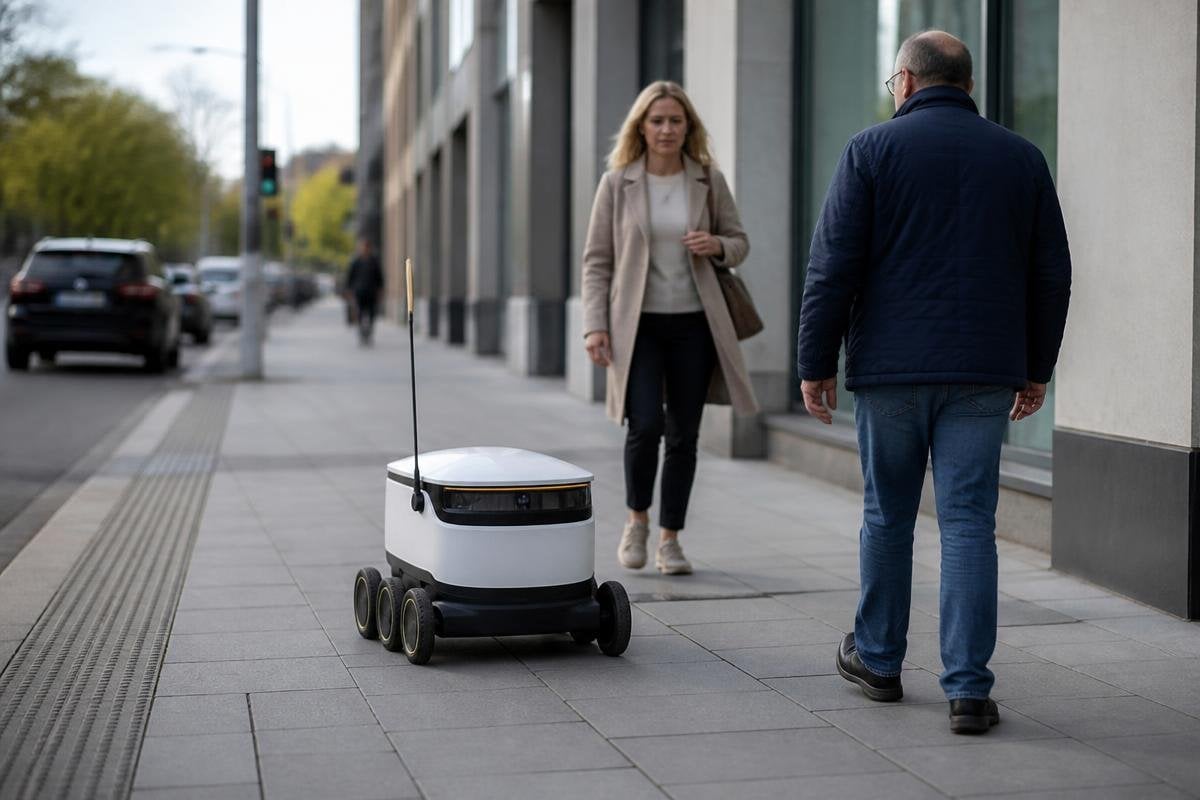
A delivery robot on a pavement can create legal questions before it causes physical harm. Who controls it, who owns its recordings, and who pays when it blocks a person’s path are questions that public-space robotics will have to answer.
- Name the person or company responsible for each robot
- Set limits for cameras, microphones, and stored data
- Record how the robot acted before an incident
The operator matters more than the machine
A robot may move on its own, but the law will still need a human or company to answer for its actions. That person could be the owner, the operator, the maker, or a service provider, depending on the contract and the local rules.
This matters when a robot leaves a marked route, hits a person, damages property, or blocks access for someone using a wheelchair. A clear chain of control gives an injured person somewhere to direct a claim and gives operators a reason to set safe limits.
The hard case comes when several parties share control. A maker may write the navigation software, a retailer may own the robot, and a contractor may supervise the service. Contracts can divide costs between those parties, but they may not settle what happens to the person affected in public.
Public roads and pavements need different rules
A robot moving through a shopping centre faces a different set of risks from one crossing a public road. The owner may control the first site, while a city or transport authority may control the second.
That split affects speed limits, stopping points, access routes, emergency action, and who can inspect the robot after a crash. Local authorities may also set rules for permits, insurance, street use, or public access. The exact answer will differ by place.
A legal rule needs facts from actual deployments. Public-space robotics reports can tie a claim to a named machine, site, and date, showing whether the rule fits the robot people will meet on the street.
A useful rule would require an operator to define the robot’s operating area before deployment. The plan should name blocked routes, no-go zones, handover points, and the person who can stop the system. Systems that cannot reach a safe state after a fault should not operate in a busy public route.
Cameras create a second legal problem
Many public-space robots need cameras, microphones, or depth sensors to detect people and objects. Those sensors may collect personal data even when the robot’s main job is delivery, cleaning, inspection, or security.
The operator may need to explain what the robot records, why it records it, how long the data stays available, and who can see it. A visible notice can help, but it does not answer every privacy question. People may still be recorded while walking past without choosing to interact with the robot.
Access also matters. A live camera feed sent to a remote control room creates a different risk from data processed on the robot and deleted soon after.
The system design should match the task. Keeping faces, voices, or location records for longer than the task needs adds legal exposure without helping the robot do its work.
Proving what happened
After an incident, a stored record may show the robot’s speed, location, sensor warnings, remote commands, and stop events. That record can help separate a software fault from a human instruction or a site problem.
Operators should protect those records from silent changes. They should also tell people how to report an incident and how to ask for relevant data. A record that nobody can read or connect to a named operator will not solve much.
The unproven part is how courts and regulators will divide responsibility when an autonomous system makes a choice that no person directly ordered. The answer may develop through new rules, contracts, insurance terms, and individual cases.
A practical decision guide
Before placing a robot in a public area, check these points:
- Named owner: Put one legal entity on the operating permit and public notice.
- Stop control: Test how a person can halt the robot and how quickly it reaches a safe state.
- Route limits: Mark crossings, access routes, stairs, doors, and areas where the robot must stop.
- Data plan: List each sensor, its purpose, storage period, and approved viewers.
- Incident record: Keep time-stamped logs for faults, remote commands, and emergency stops.
- Public contact: Give people a clear way to report harm, blocked access, or unwanted recording.
I’d require that checklist before approving a public deployment, even for a small pilot. The cost of a permit review is easier to measure than the cost of finding responsibility after someone gets hurt.
Public-space robots can work within legal limits, but the limits need to follow the machine into the street, building, and service contract. The next test is simple: when a robot causes harm, can a person identify the responsible operator and see what the robot did?
